
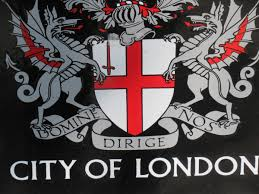
City Of London Blog Series Part 1- An Introduction of sorts
Short intro- why write anything and what is this about
Quite a number of documents, websites and such have been written about the City of London. These have fascinated me, but so has my own experience and acquired knowledge. So, I thought it might be a worthwhile endeavor to try to write a short series of Blogs covering that which I have gleaned one way or the other and explain why I find the particulars of the “City of London” such an awesome story.
Ask any visitor to “London” what they want to see in the City and they will probably say places like Buckingham Palace and Trafalgar Square, Westminster and St Paul’s Cathedrals, the Tower of London and Tower Bridge. Yet only two of these, St Paul’s and the Tower itself, are actually in the City of London. The others are in either the City of Westminster, or, in the case of Tower Bridge, in both the Boroughs of Southwark and Tower Hamlets, (one at each end).
“So, smart Alex”, I hear you say, “what and where is the City of London?”
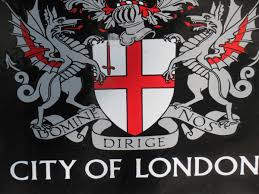
Well, the City of London, which for ease I will just refer to as the “City” if I may, is basically still defined by the boundaries of the old Roman city walls and boundaries.
At this time, I hope to write a series of Blogs covering key aspects of the City. These are planned as:
- The founding- Roman London and Anglo-Saxon and early Norman London
- Fairly Recent & Present-day London, the boundaries, wards and key sights
- Myths, Legends and allied facts
- Traditions and the source of many well-known phrases
- Governance of the City. Which may include notes on such as Court of Common Council, the Court of Aldermen of the City and Origins and Role of the Lord Mayor and Sheriffs of the City, but let’s see.
The Founding
Londinium[1] was not originally the capital of Roman province of Britannia, that was Camulodunum, (present day Colchester) originally. The Roman City was founded between 47 and 48 AD as part of Claudin invasion of Britain. It was not only sited on a convenient ‘international’ highway, the river Thames, which allowed ships from other regions of the Roman empire to bring and return with key goods, but also had key road leading to other parts of the province. In addition, the Romans had found a stretch of the river where they could create a bridge. Thus, allowing a single defensible approach from the South.
But more about Roman London in my next Blog
The Anglo-Saxon and Norman City
The Anglo-Saxon period is from the departure of the Romans in the late 5th century. It appears that by 457 AD the Roman City had been abandoned by its Romano British inhabitants. Although it appears most, if not all the Roman walls still existed.
The new invaders or immigrants from what is present day Netherlands, Germany, Danmark and the like, settled not inside the Roman walls, but around its peripheries. In fact, the Anglo-Saxon town of Lunderwic was established on or close to modern day Covent Garden. It being a Saxon use of the Roman name and adding “wic” to mean a trading town.
The town was raided and held on several occasions by Vikings over the next few centuries, then recovered by the Anglo-Saxons and lost. Finally being restored to Anglo-Saxon rule under Edward the confessor circa 1043.
Then came the Norman Invasion of 1066. Willian 1, (aka the Concorer), set about establishing his center of power in the City and built the central keep, but it was Henry III and his son William who expanded the “Tower”, adding the defensive moat and surrounding walls.
“Early -Modern” City of London
The Modern City, has expanded but generally holds to the original Roman enclosure, with some areas “without” the Roman City Walls. This expansion happened mainly from the mid-16th century, when the inhabitants grew from about 80,000 to some 700,00 byr mid-18th century. It is key to note that this was due to economic and trading growth, and thus, pre-industrialisation.
The City, or more accurately, its inhabitants and those governing it, underwent not just external or natural forces like plague and fire, but internal or nationwide forces such as civil war and revolutions.
Fore example during the War of the Roses, Edward IV returned from exile in France, was welcomed openly by the citizenry of the City in April of 1471. Then, following the Lancastrian win at the second battle of St Albans, the City fathers refused Queen Margret and her army access. This in turn lead to the Siege of London, by Thomas Neville, kin to the Earl of Warick, or the “King Maker”. This was designed to rescue Henry VI who was being held by Edward IV and the City fathers, in the Tower. Which was ultimately unsuccessful.
English Civil War, the City was a key Parlimentarian stronghold. In fact in or around 1643, the London authorities build extensive fortifications and earthen ramparts. They incorporated parts of the Roman fortifications where appropriate. This, it is estimated, was maned by some 12 regiments, amounting to over 12,000 soldiers. Many of them “Citizen Soldiers”.
“Late-Modern” City of London
During the 19th century, the City of London grew even bigger. By 1825, Metropolitan or Greater London, was reportedly the largest city in the World. With the largest port, massive logistical connections to the rest of Britian via train and canals, and, most importantly in my opinion, the City had established itself as the global center for international finance and trade.
The City had also established its governance and protocols. Some iof which are still based on those founded back in Roman or Anglo-Saxon days, but which fully relate to today’s ethical and environmental principles, but more on that, I hope in a later blog.
References
- “The Rise and Fall of Roman London”, History Hit, Robert Wynn Jones 11 June 2019. https://www.historyhit.com/the-rise-and-fall-of-roman-london/#:~:text=Under%20Claudius%2C%20Rome%20invaded%20Britain,sited%20in%20a%20strategic%20position.
- “Londinium, the Capital of Britannia”, The History of London, https://www.thehistoryoflondon.co.uk/londinium-the-capital-of-britannia/
- Clark, John (1989). Saxon and Norman London. London: Museum of London.
- Anglo-Saxon Chronicle (MS E) s.a. 1041 (1042), tr. Michael Swanton
- The Story of the Tower of Londonhttps://www.hrp.org.uk/tower-of-london/history-and-stories/the-story-of-the-tower-of-london/
- The Cambridge Group of History Population and Social Structure https://www.campop.geog.cam.ac.uk/research/projects/earlymodernlondon/
- Histories of London, 1640s to 1660s: Continuities and Turning Points https://manyheadedmonster.com/2019/01/17/histories-of-london-1640s-to-1660s-continuities-and-turning-points/
- London Museum https://www.londonmuseum.org.uk/collections/boroughs/city-of-london/#:~:text=The%20City%20of%20London%20is,marked%20by%20fire%20and%20plague.
[1] I will show a list of source material at the end of each blog, but much of the information is that which I have assimilated over the years. Whilst I have used this material only to confirm or correct my understanding, I could be in error at times, so beg the readers understanding.